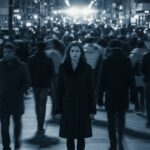
The 40-Minute Blackout
사라진 40분 – 눈은 보고 있었다
영어 지문
문장 해석
Visual experience feels like an uninterrupted movie, with the world flowing seamlessly moment to moment.
시각 경험은 끊김 없는 영화처럼 느껴지며, 세상은 순간순간 매끄럽게 흘러간다.
Even when turning the head or shifting gaze rapidly, there appears to be no gap in perception, no moment of darkness.
머리를 돌리거나 시선을 빠르게 옮길 때조차도 지각에는 틈이 없고, 어둠의 순간도 없는 것처럼 보인다.
This sense of perceptual continuity seems so natural that few question how the brain maintains such a smooth visual stream.
이러한 지각적 연속성의 감각은 너무나 자연스러워서 뇌가 어떻게 그토록 부드러운 시각의 흐름을 유지하는지 의문을 품는 사람이 거의 없다.
Yet neuroscience reveals that during rapid eye movements, the brain temporarily suppresses visual input to prevent the blurred images that would otherwise result from the motion.
그러나 신경과학은 빠른 안구 운동 중에 뇌가 시각 입력을 일시적으로 억제하여, 그렇지 않으면 움직임으로 인해 생겼을 흐릿한 이미지를 방지한다는 것을 밝혀냈다.
This phenomenon, known as saccadic suppression, creates brief sensory gaps that, when accumulated throughout a waking day, amount to approximately forty minutes—time during which the eyes are open yet effectively see nothing.
단속성 안구 운동 억제로 알려진 이 현상은 짧은 감각적 공백을 만들어내며, 이것이 깨어 있는 하루 동안 축적되면 대략 40분에 달한다—눈은 떠 있지만 사실상 아무것도 보지 못하는 시간이다.
What makes this blackout imperceptible is the brain’s remarkable ability to retroactively fill in these gaps with images captured just after the eyes stop moving, creating an illusion of unbroken vision.
이 암전을 감지할 수 없게 만드는 것은 눈이 움직임을 멈춘 직후 포착한 이미지로 이러한 공백을 소급하여 채워 넣어 끊기지 않는 시각의 환상을 만들어내는 뇌의 놀라운 능력이다.
Thus, visual perception is not a live broadcast of reality but rather an edited recording, reconstructed to conceal the discontinuities it cannot eliminate.
따라서 시각적 지각은 현실의 생방송이 아니라 편집된 녹화물이며, 제거할 수 없는 불연속성을 감추기 위해 재구성된 것이다.
주요 구문
S4: 역접 전환 + 가정법 과거 ★전환점★
원문: “Yet neuroscience reveals that during rapid eye movements, the brain temporarily suppresses visual input to prevent the blurred images that would otherwise result from the motion.”
수능 적용: 빈칸추론에서 “would otherwise”는 대조/반전의 핵심 단서 → 앞 내용과 반대되는 결과 암시
S6: What 관계대명사 주어절
원문: “What makes this blackout imperceptible is the brain’s remarkable ability to retroactively fill in these gaps with images captured just after the eyes stop moving, creating an illusion of unbroken vision.”
수능 적용: 주제문/요지문에서 자주 등장 → What절 뒤의 보어(is 다음)가 핵심 주장
S7: A not B but C 구문 + 과거분사 후치수식
원문: “Thus, visual perception is not a live broadcast of reality but rather an edited recording, reconstructed to conceal the discontinuities it cannot eliminate.”
수능 적용: 주제/요지 문제의 결론부 공식 → “not A but B”에서 B가 필자의 핵심 주장
S3: so ~ that 결과구문
원문: “This sense of perceptual continuity seems so natural that few question how the brain maintains such a smooth visual stream.”
수능 적용: few/little이 부정어임을 기억 → “few question” = “거의 아무도 의문을 품지 않는다” (부정 의미)
S5: 동격 대시(—) + 관계절
원문: “…amount to approximately forty minutes—time during which the eyes are open yet effectively see nothing.”
수능 적용: 대시(—) 뒤는 앞 내용의 핵심 요약 → 빈칸추론에서 정답 단서 위치
단어 정리
| 어휘 | 품사 | 의미 | 용례 |
|---|---|---|---|
| seamlessly | adv. | 매끄럽게, 끊김 없이 | the world flowing seamlessly |
| perceptual | adj. | 지각의, 인식의 | perceptual continuity |
| suppress | v. | 억제하다, 차단하다 | the brain temporarily suppresses visual input |
| saccadic | adj. | 단속성 안구 운동의 | saccadic suppression |
| accumulate | v. | 축적되다, 쌓이다 | when accumulated throughout a day |
| imperceptible | adj. | 감지할 수 없는 | makes this blackout imperceptible |
| retroactively | adv. | 소급하여, 사후에 | retroactively fill in these gaps |
| discontinuity | n. | 불연속성, 단절 | conceal the discontinuities |
| effectively | adv. | 사실상, 실질적으로 | yet effectively see nothing |